Popper’s vision is one of knowledge as useful information, by which we mean knowledge that solves a problem. Information counts as knowledge, therefore, if it fulfills this simple purpose.
For people living through a ruinous financial crisis or devastating climate change — or even through rapid social change that has no material effect on their lives — it can be hard to make sense of a cascade of events that seem to have no plainly evident causal chain, or even identifiable human authors. How do you account for a world we’re meant to master, but is so complex its workings seem essentially opaque?
“Human cognition is inseparable from the unconscious emotional responses that go with it.”
In theory, resolving factual disputes should be relatively easy: Just present the evidence of a strong expert consensus. This approach succeeds most of the time when the issue is, say, the atomic weight of hydrogen.
But things don’t work that way when the scientific consensus presents a picture that threatens someone’s ideological worldview. In practice, it turns out that one’s political, religious, or ethnic identity quite effectively predicts one’s willingness to accept expertise on any given politicized issue.
The question “What is truth?” is perhaps the hardest one ever posed. Science is based on the correspondence theory of truth, namely, that truth corresponds to reality. But others say that truth is based on consensus, while others say that truth is entirely relative. So, what’s the truth about truth?
ADL International Leadership Award Presented to Sacha Baron Cohen at Never Is Now 2019
Today around the world, demagogues appeal to our worst instincts. Conspiracy theories once confined to the fringe are going mainstream. It’s as if the Age of Reason – the era of evidential argument – is ending, and now knowledge is delegitimized and scientific consensus is dismissed. Democracy, which depends on shared truths, is in retreat, and autocracy, which depends on shared lies, is on the march. Hate crimes are surging, as are murderous attacks on religious and ethnic minorities.
Postmodernism predicted our post-truth hellscape. Everyone still hates it.
Technology and globalization were making the world infinitely more complicated and that meant more information to process, more dots to connect. And one way to manage this chaos is to lean more and more on narratives that strip the world of its complexity — and often reinforce our biases at the same time.
The trouble with ignorance is that it feels so much like expertise. A leading researcher on the psychology of human wrongness sets us straight.
IN MANY CASES, INCOMPETENCE DOES NOT LEAVE PEOPLE DISORIENTED, PERPLEXED, OR CAUTIOUS. INSTEAD, THE INCOMPETENT ARE OFTEN BLESSED WITH AN INAPPROPRIATE CONFIDENCE, BUOYED BY SOMETHING THAT FEELS TO THEM LIKE KNOWLEDGE.
This topic connects well to so many related topics in TOK. How do we acquire knowledge? What ethical responsibility do media companies (like youtube) have to promoting “truth”? How do we produce knowledge in the natural sciences? How reliable is intuition in acquiring knowledge?
Mental models are how we understand the world. Not only do they shape what we think and how we understand but they shape the connections and opportunities that we see. Mental models are how we simplify complexity, why we consider some things more relevant than others, and how we reason.
A mental model is simply a representation of how something works. We cannot keep all of the details of the world in our brains, so we use models to simplify the complex into understandable and organizable chunks.
The initiator of these observations was the Polish-American scholar Alfred Korybski. He most likely influenced Magritte’s art. Korzybski said “The Map is Not the Territory”. What he means is that the territory is the world and the map a generalization we use to make sense of it. It also proposes that we don’t have unmediated contact with the external world/reality (Expand your World). Korybski saw that language was at the same time the thing that made possible cultural development of the human race and at the same time the one that harmed it’s perception (Expand your World). When we communicate an experience, we often use generalizations in our words, and those generalizations leave out the things that made that event unique; they leave out the concrete experience, which results in a small abstraction of things out of a whole.
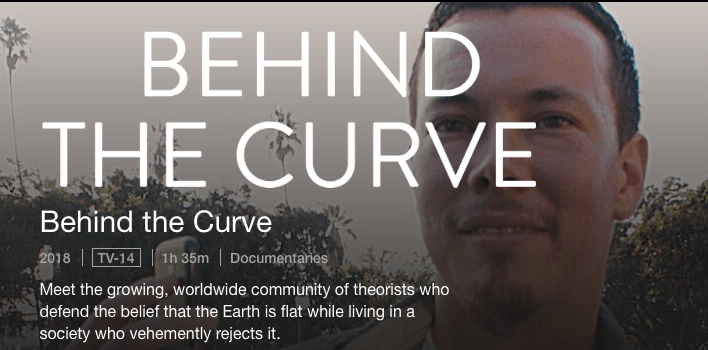
Much has been written about the concept of “fake news” and conspiracy theories but this brief list helps bring together some interesting information.
Presenting fringe theories as the essence of conspiracism gives the impression that conspiracy theorists are a handful of kooks who will believe even the most ludicrous ideas. But conspiracy thinking — the inclination to entertain conspiracy theories in general — is much more widespread than belief in any particular theory.


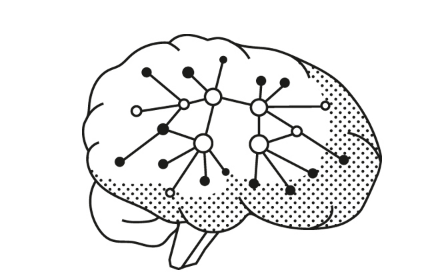 Mental models are how we understand the world. Not only do they shape what we think and how we understand but they shape the connections and opportunities that we see. Mental models are how we simplify complexity, why we consider some things more relevant than others, and how we reason.
 The initiator of these observations was the Polish-American scholar Alfred Korybski. He most likely influenced Magritte’s art. Korzybski said “The Map is Not the Territory”. What he means is that the territory is the world and the map a generalization we use to make sense of it. It also proposes that we don’t have unmediated contact with the external world/reality (Expand your World). Korybski saw that language was at the same time the thing that made possible cultural development of the human race and at the same time the one that harmed it’s perception (Expand your World). When we communicate an experience, we often use generalizations in our words, and those generalizations leave out the things that made that event unique; they leave out the concrete experience, which results in a small abstraction of things out of a whole.
 TOK Topics