Secrets of Mind-Gamer

memorycatToday we have books, photographs, computers and an entire superstructure of external devices to help us store our memories outside our brains, but it wasn’t so long ago that culture depended on individual memories. A trained memory was not just a handy tool but also a fundamental facet of any worldly mind. It was considered a form of character-building, a way of developing the cardinal virtue of prudence and, by extension, ethics. Only through memorizing, the thinking went, could ideas be incorporated into your psyche and their values absorbed.”

http://www.nytimes.com/interactive/2011/02/20/magazine/mind-secrets.html?_r=0

How does our memory work?

infomodelThe process of transferring information from STM to LTM involves the encoding or consolidation of information. This is not a function of time, that is, the longer a memory stayed in STM, the more likely it was to be placed into LTM; but on organizing complex information in STM before it can be encoded into LTM. In this process of organization, the meaningfulness or emotional content of an item may play a greater role in its retention into LTM. As instructional designers, we must find ways to make learning relevant and meaningful enough for the learner to make the important transfer of information to long-term memory.”

http://www.nwlink.com/~donclark/hrd/learning/memory.html

Why can’t you remember being a baby? Science explains

“Mammals’ brains make new cells throughout life — a process called neurogenesis — but babies of some species, including humans, produce new neurons at a much higher rate. And this process is particularly active in the hippocampus, which deals with memories and learning.

Most of the time, neurogenesis leads to better learning and improved memory. But there’s a catch. According to the Science paper, the extremely high rates of neurogenesis seen in very young brains can actually increase forgetfulness. These new neurons could be crowding out the old circuits that hold memories.”

http://www.vox.com/2014/5/8/5695500/why-cant-you-remember-being-a-baby-science-explains

Memory contaminates perception

Human-eye-008

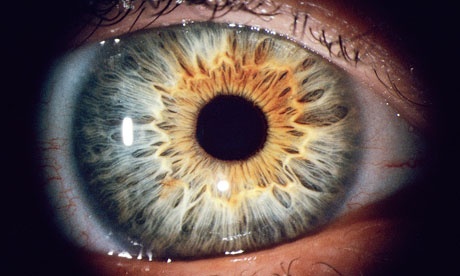
We take it for granted that we see the world as it actually is, but in fact, we do not. Our perception of the world is the brain’s best guess at what is actually happening, based on the information it receives through the senses. Optical illusions clearly demonstrate that the brain does not always interpret sensory information correctly, by producing a discrepancy between what we see and and how we perceive.

http://www.theguardian.com/science/neurophilosophy/2011/aug/17/memory-contaminates-perception

Quiz: Can you read people’s emotions?

“If you are among those people who are mystified by moods, new research offers hope. A new study shows that certain types of reading can actually help us improve our sensitivity IQ. To find out how well you read the emotions of others, take the Well quiz, which is based on an assessment tool developed by University of Cambridge professor Simon Baron-Cohen.”

Here is a handout I made based on the quiz

can you read people_s emotions

Click below for the full quiz

https://well.blogs.nytimes.com/2013/10/03/well-quiz-the-mind-behind-the-eyes/