Should we stop keeping pets? Why more and more ethicists say yes


“It is morally problematic, because more people are thinking of pets as people … They consider them part of their family, they think of them as their best friend, they wouldn’t sell them for a million dollars,” says Dr Hal Herzog, a professor of psychology at Western Carolina University and one of the founders of the budding field of anthrozoology, which examines human-animal relations. At the same time, research is revealing that the emotional lives of animals, even relatively “simple” animals such as goldfish, are far more complex and rich than we once thought (“dogs are people, too”, according to a 2013 New York Times comment piece by the neuroscientist Gregory Berns). “The logical consequence is that the more we attribute them with these characteristics, the less right we have to control every single aspect of their lives,” says Herzog.

Does this mean that, in 50 years or 100 years, we won’t have pets? Institutions that exploit animals, such as the circus, are shutting down – animal rights activists claimed a significant victory this year with the closure of Ringling Bros circus – and there are calls to end, or at least rethink, zoos. Meanwhile, the number of Britons who profess to be vegan is on the rise, skyrocketing 350% between 2006 and 2016.

https://www.theguardian.com/lifeandstyle/2017/aug/01/should-we-stop-keeping-pets-why-more-and-more-ethicists-say-yes

Did 13 Reasons Why Spark a Suicide Contagion Effect?

The show Thirteen Reasons Why raises some interesting issues regarding ethical responsibility of content producers and networks that broadcast content that may have “deleterious effects” on their viewers. This also raises interesting questions about the value and power of art.

A new study reveals that internet searches for suicide skyrocketed in the wake of the show’s release.

The question is whether this particular study, or any of the allegations that the show directly led to copycat suicides and suicide attempts, will be enough of an impetus for the show’s producers to respond. The study’s authors suggest that editing out the scene of Hannah Baker’s suicide from the show and adding information about suicide hotlines to episodes could immediately minimize some of 13 Reasons Why’s “deleterious effects.” Netflix’s response to the study, though, indicated no such moves would be forthcoming. “We always believed this show would increase discussion around this tough subject matter,” the company said in a statement. “This is an interesting quasi-experimental study that confirms this. We are looking forward to more research and taking everything we learn to heart as we prepare for Season 2.” Netflix declined interview requests from The Atlantic regarding the show.

https://www.theatlantic.com/entertainment/archive/2017/08/13-reasons-why-demonstrates-cultures-power/535518/

Sex abuse victim in her 20s allowed by doctors to choose euthanasia due to ‘incurable’ PTSD

This article raises interesting questions around who has the right to euthanasia. Often people think of elderly or people with illnesses such as cancer as those “worthy” of euthanasia. What of those with psychological trauma? Furthermore, who gets to decide whether a person is worthy of legally ending their own life?

http://www.independent.co.uk/news/world/europe/sex-abuse-victim-in-her-20s-allowed-by-dutch-doctors-to-undergo-euthanasia-due-to-severe-ptsd-a7023666.html

Planet Money Podcast: What does Georgetown owe the descendants of the 272 slaves it sold in 1838?

“In 1838, Jesuit priests sold a group of 272 men, women, and children – slaves – to pay off Georgetown University’s debts. The slaves were sent from Maryland to Louisiana. In part one of this two part episode, we told the story of how the residents of a small town discovered where they’d come from. Now in part two, we ask what, if anything, Georgetown owes the descendants of those slaves.”

Parts One and Two linked below

http://www.npr.org/sections/money/2017/04/21/525058118/episode-766-georgetown-louisiana-part-one

http://www.npr.org/sections/money/2017/04/26/525769269/episode-767-georgetown-louisiana-part-two

Genetic Engineering Will Change Everything Forever – CRISPR

“Designer babies, the end of diseases, genetically modified humans that never age. Outrageous things that used to be science fiction are suddenly becoming reality. The only thing we know for sure is that things will change irreversibly.”


What you need to know about CRISPR | Ellen Jorgensen

Should we bring back the wooly mammoth? Or edit a human embryo? Or wipe out an entire species that we consider harmful? The genome-editing technology CRISPR has made extraordinary questions like these legitimate — but how does it work? Scientist and community lab advocate Ellen Jorgensen is on a mission to explain the myths and realities of CRISPR, hype-free, to the non-scientists among us.

Morality Quiz at YourMorals.org

“Our goal is to understand the way our “moral minds” work. Why do people disagree so passionately about what is right? Why, in particular, is there such hostility and incomprehension between members of different political parties? By filling out a few of our surveys, you’ll help us answer those questions We, in return, will give you an immediate report on how you scored on each study, quiz, or survey. We’ll show you how your responses compare to others and we’ll tell you what that might say about you.”

https://www.yourmorals.org/

Should the ivory trade be legalized?

Ivory has been widely used in a variety of decorative and practical uses by for thousands of years. Some ivory producing animals, i.e. elephants, have been hunted almost to extinction because of the demand for their tusks. The global trade in ivory is illegal though you can still buy ivory products in some countries. When trade is made illegal, often the price of the goods increases which creates stronger incentives for illegal trade and poaching. Some argue that a legalization of the international ivory trade would increase the incentive to raise elephants to feed the market thereby increasing the overall number of elephants.

There are economic debates about whether this approach would even work but this debate raises some interesting ethical and moral debates. Let’s assume for a minute that legalizing the trade in ivory would result in less poaching and more available animals since people would have an economic incentive to breed, raise and take care of these animals. In this case, is it still ethical to allow the ivory trade?

This question pits the consequentialist way of thinking against a deontological approach. Is the favorable outcome of more animals worth the cost of commodifying endangered species’ lives? Or is the moral principle that we should protect these animals at all costs outweigh the potential benefit of legalizing the market?

The question cane be broadened to include Rhino horns which have monetary value because some people believe the horns have a variety of medicinal uses.

Below are some articles to help you think through the debate.

Legal market will curb poaching

“However, the ban caused a vertical split in CITES, with one side demanding that the trade be declared legal and the other saying that legalising would be fatal for African elephants, which are the source of most of the illegally traded ivory in the world. The issue is likely to come to a head at the 17th Conference of Parties of CITES to be held at Johannesburg, South Africa, from September 24 to October 5. CITES is under pressure to devise innovative methods to allow ivory trade while ensuring elephant conservation.”

http://www.downtoearth.org.in/coverage/should-ivory-trade-be-legalised–53564

Debate: Would a legal ivory trade save elephants or speed up the massacre?

“Whether or not legal sales of otherwise illegal products will undercut harmful black markets is a classic question in economics. It seems to have worked when the US repealed the prohibition of alcohol and legal booze flooded markets previously dominated by bootleggers. It’s less clear whether it is working in places that have experimented with legalising marijuana or prostitution. Will it work for ivory? This question pits two sets of economic theories against each other.”

https://www.theguardian.com/environment/2016/oct/01/debate-can-legal-ivory-trade-save-elephants

Legalizing ivory trade won’t save elephants, study concludes

“Is killing elephants—legally—the best way to save them? The controversial idea will get a hearing next week at a major conservation meeting in South Africa, where elephant-rich African nations will renew a push to scrap a long-standing global ban on ivory sales and replace it with a limited legal trade in tusks taken from carefully managed elephant populations. A legal market, they argue, will undermine the poaching that is depleting herds and provide a financial incentive for protecting them.”

http://www.sciencemag.org/news/2016/09/legalizing-ivory-trade-wont-save-elephants-study-concludes

Why Does a Rhino Horn Cost $300,000? Because Vietnam Thinks It Cures Cancer and Hangovers

“The weird thing is that the surge in Vietnamese demand is fairly recent. Though rhino horn elixirs for fevers and liver problems were first prescribed in traditional Chinese medicine more than 1,800 years ago, by the early 1990s demand was limited. Trade bans among Asian countries instituted in the 1980s and early 1990s proved largely effective in quashing supply, with some help from poaching crackdowns in countries where rhinos live. Meanwhile, the removal of rhino horn powder from traditional Chinese pharmacopeia in the 1990s had largely doused demand. In the early 1990s, for instance, horns sold for only $250-500/kg (pdf, p.85). And only around 15 rhinos were poached in South Africa each year from 1990 to 2007.”

https://www.theatlantic.com/business/archive/2013/05/why-does-a-rhino-horn-cost-300-000-because-vietnam-thinks-it-cures-cancer-and-hangovers/275881/
Don’t Discriminate Against Mutants Like Me

“The legislation would enable companies to coerce employees into participating in wellness programs that could require them to undergo genetic testing and provide genetic information about themselves and their families. Although discriminating against workers with genetic abnormalities would be prohibited, it would be very difficult to prove that discrimination had taken place. Employers might simply invoke other reasons for hiring and firing decisions.”

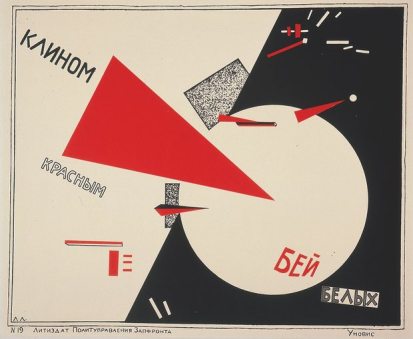
We cannot celebrate revolutionary Russian art – it is brutal propaganda

2000“We will never stop looking at the art of the Russian avant garde, nor should we. Yet we need to place it in its true context. It is a lazy, immoral lie to keep pretending there was anything glorious about the brutal experiment Lenin imposed on Russia – or anything innocent about its all-too-brilliant propaganda art. Perhaps the Royal Academy is about to open that very show, but its shallow title seems all too happy to cash in on revolutionary chic.”

https://www.theguardian.com/artanddesign/jonathanjonesblog/2017/feb/01/revolutionary-russian-art-brutal-propaganda-royal-academy