“To write history is to fill our glass with water from the Thames and claim we have captured the river. This is as true of Jane Smiley as it is of Niall Ferguson, but the author of fiction makes no claim to objective truth or authority and so may be more true to our times.”
Raises a lot of interesting questions about the role of context on the impact and meaning of works of art in addition to the role of museums and relationships between history and art.
“Not only are they dull and predictable, but the artistic skill of many of the big names in contemporary art is suspect. Behind the grandiose pieces and the attention grabbing works created purely for shock value lies a very important question: “Where is the skill and ability in all this?” No skill is required to place a rotting cows head in a glass cube with an insect-o-cutor (A Thousand Years by Damien Hirst). No ability is needed to set up a room with a light that switches on and off (Work No. 227: The Lights Going On and Offby Martin Creed, a work that won him the Turner Prize). It is most probably the case that the electrician who installed said lights and the abattoir worker who severed the cow’s head possess more skill and expertise than either Mr. Hirst or Mr. Creed.”
The show Thirteen Reasons Why raises some interesting issues regarding ethical responsibility of content producers and networks that broadcast content that may have “deleterious effects” on their viewers. This also raises interesting questions about the value and power of art.
A new study reveals that internet searches for suicide skyrocketed in the wake of the show’s release.
The question is whether this particular study, or any of the allegations that the show directly led to copycat suicides and suicide attempts, will be enough of an impetus for the show’s producers to respond. The study’s authors suggest that editing out the scene of Hannah Baker’s suicide from the show and adding information about suicide hotlines to episodes could immediately minimize some of 13 Reasons Why’s “deleterious effects.” Netflix’s response to the study, though, indicated no such moves would be forthcoming. “We always believed this show would increase discussion around this tough subject matter,” the company said in a statement. “This is an interesting quasi-experimental study that confirms this. We are looking forward to more research and taking everything we learn to heart as we prepare for Season 2.” Netflix declined interview requests from The Atlantic regarding the show.
Banksy’s Girl with Balloon comes top in a popular vote, despite its.oversimplification of human emotion. Real art is ambiguous and difficult.
The Victorian art critic John Ruskin, who in his book Modern Painters opines that “the average intellect and feeling of the majority of the public” give them zero competence “to distinguish what is really excellent”. Only a critic, such as himself, with superior sensibility and knowledge can judge what is truly great in art.
Writing history is an act of interpretation based on the past. Creating art about history further separates past events from the final work.
What happens when an artwork tells a story that distorts an actual event? What if that “distorted” artwork communicates a historical “truth”?
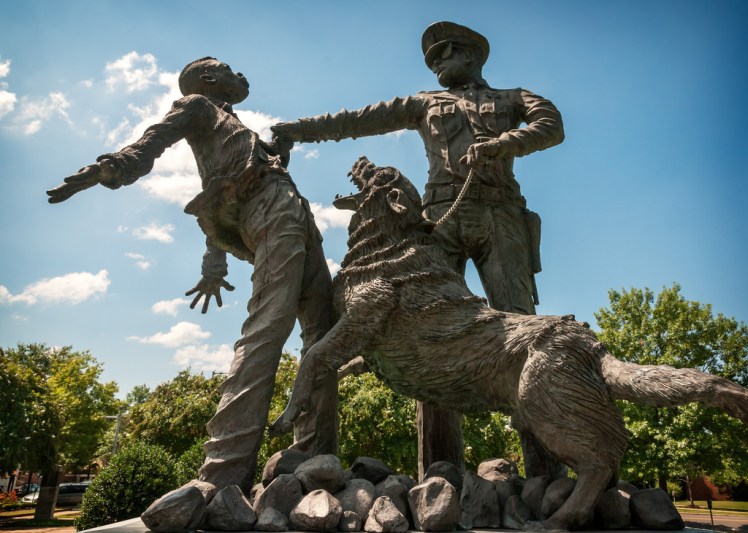
Below is a famous image from a civil rights protest in Birmingham. The image tells a powerful story. It turns out that the actual events leading up to the image and the people involved tell a much different story than one we would infer simply by looking at the image.
There is a sculpture, based on the above image, that tells an even more dramatic story pictured below. What does it mean if the artwork, though powerful, does not accurately tell the actual story of the events it is depicting? What if it tells the truth of the brutality of the crackdown on the civil rights movement through inaccurately depicting an event? What does all this say about the power of artwork? The connection between history and art?
Below is a link to Malcolm Gladwell’s podcast that discusses these issues and is where I found this story. I edited it down for class:
I found another blog post discussing these issues in greater detail. Really interesting discussion as well in the comments section.
When the Truth Gets in the Way of the Story You Want to Tell
“Put simply, we don’t like complicated stories. We like our stories cleaned up and sanitized and well tailored for public consumption. We like heroic knights vs. evil villains. We like incorrigible racists and bigots vs. tolerant human rights champions. We like credulous believers vs. rational freethinkers. We like medieval jihadis vs. freedom fighters. We like damned vs. saved. We like lazy welfare sponges vs. hardworking taxpayers. We like sinners and saints and darkness and light and red and blue and black and white. And if reality doesn’t serve up the story that we want? If the truth turns out to be a bit blurrier and more inconvenient than we’d prefer? Well, we’ll just tell the story how we want to.”
“Artists can certainly capture crises via their own aesthetic sensibility, and can use their platforms to draw a different kind of awareness to specific tragedies. But in doing so, many artists like Ai have had to figure out how to balance their own perspectives as emotionally invested outsiders with respect for their subjects. Often, the most resonant art they create are works where the excesses of self-expression have been peeled back; in the cases of pieces like Laundromat, they allow the evidence of the crisis to connect with viewers as directly as possible.”
“But as Hitler understood, artists play a distinctive role in challenging authoritarianism. Art creates pathways for subversion, for political understanding and solidarity among coalition builders. Art teaches us that lives other than our own have value. Like the proverbial court jester who can openly mock the king in his own court, artists who occupy marginalized social positions can use their art to challenge structures of power in ways that would otherwise be dangerous or impossible.”
“We will never stop looking at the art of the Russian avant garde, nor should we. Yet we need to place it in its true context. It is a lazy, immoral lie to keep pretending there was anything glorious about the brutal experiment Lenin imposed on Russia – or anything innocent about its all-too-brilliant propaganda art. Perhaps the Royal Academy is about to open that very show, but its shallow title seems all too happy to cash in on revolutionary chic.”
“Conceptual art gets a bad rap. It’s the butt of endless jokes. Works of this genre that were nominated for the high honor of the Turner Prize were called BS by the U.K. culture minister. Shia Labeouf used it as an excuse to put a bag over his head. So why is conceptual art so confounding? How do curators make it palatable? And what are we even talking about when we talk about “conceptual art”?”


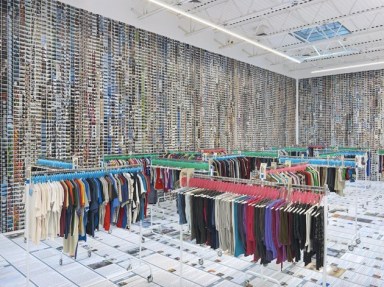 “Artists can certainly capture crises via their own aesthetic sensibility, and can use their platforms to draw a different kind of awareness to specific tragedies. But in doing so, many artists like Ai have had to figure out how to balance their own perspectives as emotionally invested outsiders with respect for their subjects. Often, the most resonant art they create are works where the excesses of self-expression have been peeled back; in the cases of pieces like Laundromat, they allow the evidence of the crisis to connect with viewers as directly as possible.”
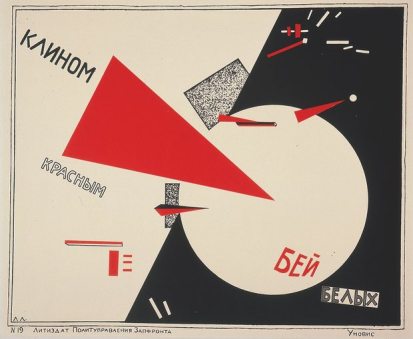 “We will never stop looking at the art of the Russian avant garde, nor should we. Yet we need to place it in its true context. It is a lazy, immoral lie to keep pretending there was
  TOK Topics