“We will never stop looking at the art of the Russian avant garde, nor should we. Yet we need to place it in its true context. It is a lazy, immoral lie to keep pretending there was anything glorious about the brutal experiment Lenin imposed on Russia – or anything innocent about its all-too-brilliant propaganda art. Perhaps the Royal Academy is about to open that very show, but its shallow title seems all too happy to cash in on revolutionary chic.”
The question should really be, “whose approach to justice is more ethical?” Or even, “Whose actions are more ethical?”
Regardless, for those who don’t know, Daredevil is a comic book hero as well as a character in a Netflix tv series by the same name. He was blinded by radioactive goo when he was a child but his other senses were heightened by the same accident. As an adult, he is a lawyer by day but a superhero vigilante by night. He lives in a crime ridden area but he does not kill “bad guys” but turns them over to law enforcement. He believes in using the justice system to deal with criminals but often finds law enforcement and the justice system ineffective at putting away these criminals.
In season 2 of the Netflix Daredevil show, a new character, The Punisher, is introduced who has a fundamentally different approach to the Daredevil. The Punisher also goes after bad guys but does not apprehend or arrest them, he kills them. The two characters have the same interest in dealing with crime and often have the same targets but think about justice, morality and ethics differently.
In order to explore the questions mentioned above, consider the following: Below are two scenes from the tv show in which the two characters talk and argue about their competing approaches.
After that, a couple of articles about the same question.
Why The Punisher Is ‘Daredevil’s’ Most Moral Character
“The only moral thing to do to criminals who murder at will in a world where the government authorities are, at best, ineffective or, at worst, corrupt is stop them for good. Kill them. Make sure they can’t kill any innocent people ever again”
“That said, is Frank Castle morally justified /inside the bounds of the world he is placed/ to be an ultraviolent vigilante? You have said yes — because there is no system of justice to appeal to. In a world where the way government is executed is utterly corrupt and at the same time the mechanisms for gaining justice are utterly shrouded in unknowns (and my in fact be unobtainable), it seems to be your view that the individual is then morally obligated to take matters into his own hands.”
How Netflix’s New Daredevil Series Makes Torture Into a Virtue
This article also has a different focus from the question but still informs the question of whether the Daredevil behaves ethically. His use of extra judicial physical punishment and torture is central to his character. Though he comes short of killing “bad guys,” is he behaving ethically?
“But even if Daredevil is not an agent of the state, his use of torture still serves (and arguably even validates) official power. The Kingpin’s final downfall is engineered when Daredevil terrorizes a witness into turning state’s evidence. The guy agrees after Daredevil threatens him—and then the hero hits him another few times, just to emphasize the righteous motivating force of unaccountable brutality. The episode then moves on to a collage of FBI agents rounding up the bad guys.
“The hero tortures and that torture races through the legal system, righting wrongs. Information gained through torture is not a poisoned fruit; it’s justice itself.”
“Such accounts may make us feel good about ourselves, but they are misguided and simplistic: They reflect a misunderstanding of knowledge that focuses too narrowly on what goes on between our ears. Here is the humbler truth: On their own, individuals are not well equipped to separate fact from fiction, and they never will be. Ignorance is our natural state; it is a product of the way the mind works.”
“It’s a fact that all studies are biased and flawed in their own unique ways. The truth usually lies somewhere in a flurry of research on the same question. This means real insights don’t come by way of miraculous, one-off findings or divinely ordained eureka moments; they happen after a long, plodding process of vetting and repeating tests, and peer-to-peer discussion. The aim is to make sure findings are accurate and not the result of a quirk in one experiment or the biased crusade of a lone researcher.”
“Conceptual art gets a bad rap. It’s the butt of endless jokes. Works of this genre that were nominated for the high honor of the Turner Prize were called BS by the U.K. culture minister. Shia Labeouf used it as an excuse to put a bag over his head. So why is conceptual art so confounding? How do curators make it palatable? And what are we even talking about when we talk about “conceptual art”?”
“AMERICANS BORN IN the United States are more murderous than undocumented immigrants. Fighting words, I know. But why? After all, that’s just what the numbers say.
“Still, be honest: you wouldn’t linger over a story with that headline. It’s “dog bites man.” It’s the norm. And norms aren’t news. Instead, you’ll see two dozen reporters flock to a single burning trash can during an Inauguration protest. The aberrant occurrence is the story you’ll read and the picture you’ll see. It’s news because it’s new.
“New discoveries about the human mind show the limitations of reason.”
“Even after the evidence “for their beliefs has been totally refuted, people fail to make appropriate revisions in those beliefs,” the researchers noted. In this case, the failure was “particularly impressive,” since two data points would never have been enough information to generalize from.”
“Many of the world’s biggest problems require asking questions of scientists — but why should we believe what they say? Historian of science Naomi Oreskes thinks deeply about our relationship to belief and draws out three problems with common attitudes toward scientific inquiry — and gives her own reasoning for why we ought to trust science.”
“In a report laden with caveats and notes of caution, the group endorsed the alteration of human eggs, sperm and embryos — but only to prevent babies from being born with genes known to cause serious diseases and disability, only when no “reasonable alternative” exists, and only when a plan is in place to track the effects of the procedure through multiple generations.
“Human genetic engineering for any reason has long been seen as an ethical minefield. Many scientists fear that the techniques used to prevent genetic diseases might also be used to enhance intelligence or create humans physically suited to particular tasks, like soldiers.”
“From our founding we have made these kinds of moral demands of our soldiers. It starts with the oath they swear to support and defend the Constitution, an oath made not to a flag, or to a piece of ground, or to an ethnically distinct people, but to a set of principles established in our founding documents. An oath that demands a commitment to democracy, to liberty, to the rule of law and to the self-evident equality of all men. The Marines I knew fought, and some of them died, for these principles.”
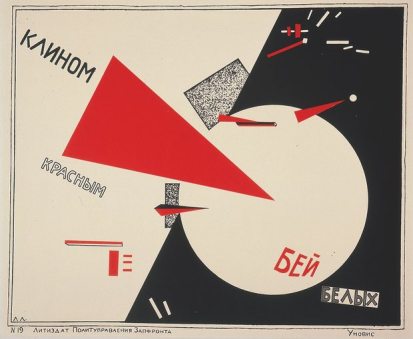 “We will never stop looking at the art of the Russian avant garde, nor should we. Yet we need to place it in its true context. It is a lazy, immoral lie to keep pretending there was anything glorious about the brutal experiment Lenin imposed on Russia – or anything innocent about its all-too-brilliant propaganda art. Perhaps the Royal Academy is about to open that very show, but its shallow title seems all too happy to cash in on revolutionary chic.”
 “It’s a fact that all studies are biased and flawed in their own unique ways. The truth usually lies somewhere in a flurry of research on the same question. This means real insights don’t come by way of miraculous, one-off findings or divinely ordained eureka moments; they happen after a long, plodding process of vetting and repeating tests, and peer-to-peer discussion. The aim is to make sure findings are accurate and not the result of a quirk in one experiment or the biased crusade of a lone researcher.”
 TOK Topics