Historiography: How historians DO history

“When doing history, it helps to keep in mind that there are many different ways of determining how history happens. One of the key things to remember is that historians disagree very much over why almost any event happened. In the search for how things happen, we get ideas about how to understand our present world’s events and what to do about them, if anything.”

http://ibatpv.org/ib/histo.html

Death of the Author

From wikipedia: “The Death of the Author (French: La mort de l’auteur) is a 1967 essay by the French literary critic and theorist Roland Barthes. Barthes’s essay argues against traditional literary criticism’s practice of incorporating the intentions and biographical context of an author in an interpretation of a text, and instead argues that writing and creator are unrelated. ”

From the text: “Once the Author is gone, the claim to “decipher” a text becomes quite useless. To give an Author to a text is to impose upon that text a stop clause, to furnish it with a final signification, to close the writing. This conception perfectly suits criticism, which can then take as its major task the discovery of the Author (or his hypostases: society, history, the psyche, freedom) beneath the work: once the Author is discovered, the text is “explained:’”

http://www.tbook.constantvzw.org/wp-content/death_authorbarthes.pdf

The Price of a 50-Year Myth: The Consequences of the Memory of the Cuban Missile Crisis

“The ‘eyeball to eyeball’ imagery made for great drama (it features in the 2000 movie “13 Days”), but it has contributed to some of our most disastrous foreign policy decisions, from the escalation of the Vietnam War under Johnson to the invasion of Iraq under George W. Bush.”

What history is and isn’t

“History is not the past.

The semantic problem is not helped by the fact that in English we tend to use the words ‘history’ and ‘the past’ interchangeably. One of the most useful things you can do in studying history is to begin to use the words to signify very different things. The past is a term used to indicate all the events which occurred before a given point in time: everything that has ever happened to everyone, everywhere at any time before now. The past is neither the present nor the future.”

http://www.internationalschoolhistory.net/tok/what_history_is_and_isnt.htm

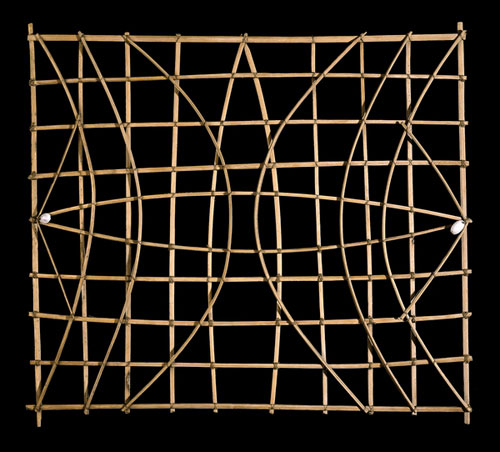
Book: The Wayfinders: Why Ancient Wisdom Matters in the Modern World by Wade Davis

“Every culture is a unique answer to a fundamental question: What does it mean to be human and alive? In The Wayfinders, renowned anthropologist, winner of the prestigious Samuel Johnson Prize, and National Geographic Explorer-in-Residence Wade Davis leads us on a thrilling journey to celebrate the wisdom of the world’s indigenous cultures.

In Polynesia we set sail with navigators whose ancestors settled the Pacific ten centuries before Christ. In the Amazon we meet the descendants of a true lost civilization, the Peoples of the Anaconda. In the Andes we discover that the earth really is alive, while in Australia we experience Dreamtime, the all-embracing philosophy of the first humans to walk out of Africa. We then travel to Nepal, where we encounter a wisdom hero, a Bodhisattva, who emerges from forty-five years of Buddhist retreat and solitude. And finally we settle in Borneo, where the last rainforest nomads struggle to survive.

Understanding the lessons of this journey will be our mission for the next century. For at risk is the human legacy — a vast archive of knowledge and expertise, a catalogue of the imagination. Rediscovering a new appreciation for the diversity of the human spirit, as expressed by culture, is among the central challenges of our time.”

http://www.amazon.com/Wayfinders-Ancient-Wisdom-Matters-Lectures-ebook/dp/B00IN8OT5I/ref=sr_1_1?ie=UTF8&qid=1422497326&sr=8-1&keywords=wayfinders&pebp=1422497539790&peasin=B00IN8OT5I