Why can’t you remember being a baby? Science explains

“Mammals’ brains make new cells throughout life — a process called neurogenesis — but babies of some species, including humans, produce new neurons at a much higher rate. And this process is particularly active in the hippocampus, which deals with memories and learning.

Most of the time, neurogenesis leads to better learning and improved memory. But there’s a catch. According to the Science paper, the extremely high rates of neurogenesis seen in very young brains can actually increase forgetfulness. These new neurons could be crowding out the old circuits that hold memories.”

http://www.vox.com/2014/5/8/5695500/why-cant-you-remember-being-a-baby-science-explains
Memory contaminates perception

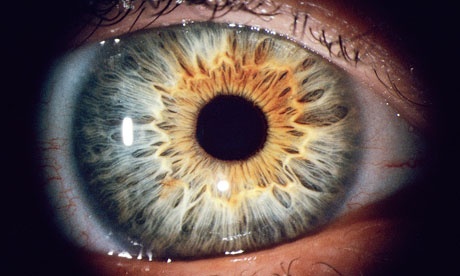
Human-eye-008

We take it for granted that we see the world as it actually is, but in fact, we do not. Our perception of the world is the brain’s best guess at what is actually happening, based on the information it receives through the senses. Optical illusions clearly demonstrate that the brain does not always interpret sensory information correctly, by producing a discrepancy between what we see and and how we perceive.

http://www.theguardian.com/science/neurophilosophy/2011/aug/17/memory-contaminates-perception

Why Our Memory Fails Us

“That is how we all usually respond when our memory is challenged. We have an abstract understanding that people can remember the same event differently. The film ‘Rashomon’ made this point more than 60 years ago, the Showtime series ‘The Affair’ presents each episode from two conflicting viewpoints, and contradictory witness testimony is a crime drama trope. But when our own memories are challenged, we may neglect all this and instead respond emotionally, acting as though we must be right and everyone else must be wrong.”

http://www.nytimes.com/2014/12/02/opinion/why-our-memory-fails-us.html?_r=0

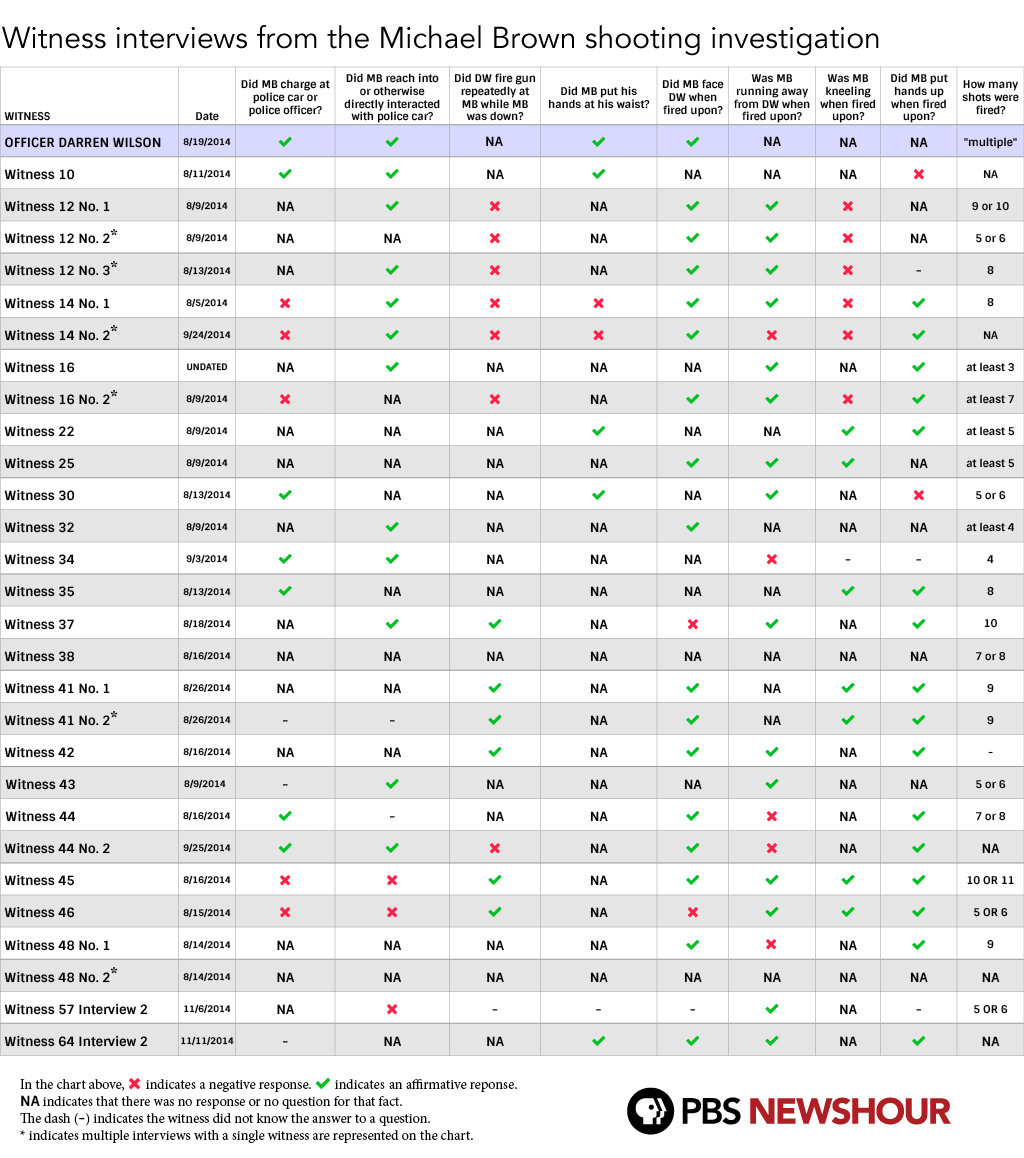
What do the newly released witness statements tell us about the Michael Brown shooting?

table-finalfinalup4“Over the course of the investigation, federal agents interviewed dozens of witnesses—some compelled to come forward by subpoena—to piece together what happened on that August 9 afternoon. Shortly after the press conference announcing the jury’s decision, St. Louis County Prosecuting Attorney Robert McCulloch released the transcripts of interviews with witnesses and Wilson.

We read and analyzed more than 500 pages of witness testimony and compared each statement to those given by Wilson. Below is a chart comparing several key details of the officer’s report to the witness statements. Was Brown facing Wilson when he was shot, or was his back turned to him? Did Brown have his hands in the air, or were they reaching toward his waist?”

http://www.pbs.org/newshour/updates/newly-released-witness-testimony-tell-us-michael-brown-shooting/

Podcast: Radiolab: Outside Westgate

“In the wake of public tragedy there is a space between the official narrative and the stories of the people who experienced it. Today, we crawl inside that space and question the role of journalists in helping us move on from a traumatic event.

NPR’s East Africa correspondent Gregory Warner takes us back to the 2013 terrorist attacks on the Westgate Mall in Nairobi, Kenya. Warner reported on the attack as it happened, listening to eyewitness accounts, sorting out the facts, establishing the truth. But he’s been been wrestling with it ever since as his friends and neighbors try not only to put their lives back together, but also try to piece together what really happened that day.”

http://www.radiolab.org/story/outside-westgate/

I made a shorter version of this podcast to play in class: