Why poetry is good for the rational mind Poetry shows us that the world is more varied and unpredictable than we might otherwise imagine.

“The trouble is that, as with most clichés, “Poetry teaches us what it means to be human” does contain an element of truth. Like maths, or political theory, poetry is a form of thought. It is a way in which human understanding goes on. This being the case, we might expect good poetry to understand more, or more deeply, than bad verse does, just as professional mathematicians can discover what high school students can’t. Sure enough, we find William Mc­Gonagall’s odes implausible and hilarious but read William Shakespeare’s sonnets for insights into lovers’ behaviour.”

https://newhumanist.org.uk/articles/5052/why-poetry-is-good-for-the-rational-mind?mc_cid=6e8e6bd94e&mc_eid=34e2887073

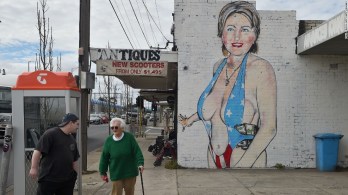
Melbourne graffiti artist sprays burqa over provocative Hillary Clinton mural

160803093028-australian-artist-clinton-mural-super-169Is censorship of artwork ever appropriate? If so, under what circumstances?

“A controversial mural of Hillary Clinton will be allowed to remain after the artist modified it from depicting the politician in a revealing swimsuit to one where she is wearing a burqa instead.”

http://edition.cnn.com/2016/08/02/asia/australia-clinton-mural-artist-burqa/

The man who destroyed all his belongings

p041bh89Should performance art considered art? What does this piece tell us about contemporary society?
“A new exhibition in Basel presents the work of Michael Landy, who, in 2001, famously destroyed everything he owned as a piece of performance art. Alastair Sooke meets him.”

http://www.bbc.com/culture/story/20160713-michael-landy-the-man-who-destroyed-all-his-belongings?mc_cid=6e8e6bd94e&mc_eid=34e2887073

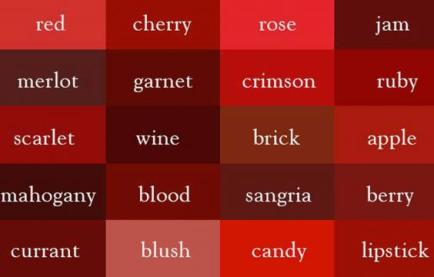
The world’s first thesaurus of colour shades: What kind of yellow is an egg yolk?

thesaurus-red

“I started to fall in love with words that could do double duty,” admits Sundberg, “colours you could load with metaphorical meaning and would give a reader more information than simply hue.

“For example, ‘porcelain white’ evokes stature, texture, possibly even a time period. ‘Watermelon pink’ makes you think of summer, sweet things, makes your mouth water. ‘Chartreuse’ feels sharp and bold, adds a hint of magic. My goal became to create a spectrum of words that I could endow with meaning and help add new layers to my stories.”

http://www.independent.co.uk/life-style/design/the-world-s-first-thesaurus-of-colour-shades-what-kind-of-yellow-is-an-egg-yolk-a6877791.html?mc_cid=c28053bf7b&mc_eid=34e2887073

Tell us something we don’t know: why science can’t show us much about art

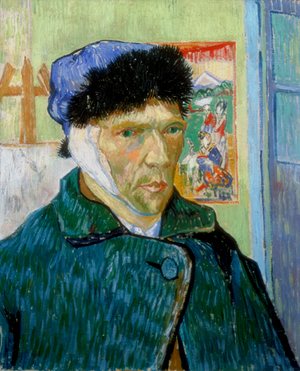
3762“The scientific ‘discovery’ that Van Gogh’s art changed after his 1888 breakdown proves a forensic approach is no match for the subjective eye of an art lover.

“There are objective results in science. There is no objective truth in art. It exists in our eyes and in our imaginations. I happen to agree with the research behind this latest Van Gogh investigation – that he got more strident and emotional in his art as his mental health declined – to the extent that I find the results obvious. But someone who has spent years looking at Van Gogh might disagree – she might see this as a melodramatic interpretation and argue that Van Gogh is not really an expressionist painter at all but a student of light and colour. That’s a valid point of view too, whatever the science says.

“Thanks to science, we know that we live on a rock orbiting a mediocre star in a mediocre galaxy. But we won’t ever invent a science that can tell us what Van Gogh’s painting Starry Night is about. The data lies hidden in our souls.”

The unexpected math behind Van Gogh’s “Starry Night” – Natalya St. Clair

Physicist Werner Heisenberg said, “When I meet God, I am going to ask him two questions: why relativity? And why turbulence? I really believe he will have an answer for the first.” As difficult as turbulence is to understand mathematically, we can use art to depict the way it looks. Natalya St. Clair illustrates how Van Gogh captured this deep mystery of movement, fluid and light in his work.

What is art? “Turner Prize logic baffles not just the British establishment”

“If you’re puzzled by what is considered a work of art, you’re not the only one. Even art critics wonder about the four shortlisted nominees for the prestigious Turner Prize, which will be given out on December 7.”

http://www.dw.com/en/turner-prize-logic-baffles-not-just-the-british-establishment/a-18898880?mc_cid=f607b9a6a4&mc_eid=34e2887073

The war against humanities at Britain’s universities

What makes a subject worth learning? Worth teaching? Must there be a profitable end point for those learning? Can subjects have intrinsic value? These are some of the questions surrounding issues around subjects in the Humanities (History, Social Sciences, Human Sciences, etc.).

“The liberal education which seeks to provide students with more than mere professional qualifications appears to be dying a slow and painful death, overseen by a whole cadre of what cultural anthropologist David Graeber calls “bullshit jobs”: bureaucrats hired to manage the transformation of universities from centres of learning to profit centres. As one academic put it to me: “Every dean needs his vice-dean and sub-dean and each of them needs a management team, secretaries, admin staff; all of them only there to make it harder for us to teach, to research, to carry out the most basic functions of our jobs.” The humanities, whose products are necessarily less tangible and effable than their science and engineering peers (and less readily yoked to the needs of the corporate world) have been an easy target for this sprawling new management class.”

http://www.theguardian.com/education/2015/mar/29/war-against-humanities-at-britains-universities

What Art Unveils

“Art is a way of learning about ourselves. Works of art are tools, but they have been made strange, and that is the source of their power.”

“My hypothesis is that artists make stuff not because the stuff they make is special in itself, but because making stuff is special for us. Making activities — technology, for short — constitute us as a species. Artists make stuff because in doing so they reveal something deep and important about our nature, indeed, I would go so far as to say, about our biological nature.”