Americans disagree about what art is: Ceci N’Est Pas Une Pollapalooza

What is art? According to the Russian writer Leo Tolstoy, the activity of art is “to evoke in oneself a feeling one has once experienced, and having evoked it in oneself, then, by means of movements, lines, colors, sounds, or forms expressed in words, so to transmit that feeling that others may experience the same feeling.” But, according to a new poll, many Americans believe art is just old paintings and sculptures they couldn’t make themselves.

Article link

Beethoven vs. Baby Shark: Is good art better than bad art?

A very thoughtful and thorough discussion of an important question. Many You might hypothesize that the Beethoven fans get more enjoyment per listen than the Baby Shark fans. But this really isn’t obvious; children can get quite excited about Baby Shark. Anyway, even if that’s true, it’s unlikely to outweigh the huge advantage that Baby Shark has in terms of sheer volume.

https://fakenous.substack.com/p/beethoven-vs-baby-shark?

Nick Cave on AI generated art

Songs arise out of suffering, by which I mean they are predicated upon the complex, internal human struggle of creation and, well, as far as I know, algorithms don’t feel. Data doesn’t suffer. ChatGPT has no inner being, it has been nowhere, it has endured nothing, it has not had the audacity to reach beyond its limitations, and hence it doesn’t have the capacity for a shared transcendent experience, as it has no limitations from which to transcend. ChatGPT’s melancholy role is that it is destined to imitate and can never have an authentic human experience, no matter how devalued and inconsequential the human experience may in time become.

https://www.theredhandfiles.com/chat-gpt-what-do-you-think/

Freakonomics Podcast: Should We Separate the Art From the Artist?

Question #1: Is it wrong to enjoy the art of “canceled” artists?

One of the first “canceled” artists Stephen and Angela discuss is, of course, Michael Jackson. To learn more about the allegations against the pop star, read this New York Times article by Ben Sisario, or watch the 2019 Emmy-winning documentary, HBO’s Leaving Neverland.

Angela wonders if it’s okay to enjoy Annie Hall, one of her all-time favorite movies. This 2018 New York Times piece offers a detailed timeline of Woody Allen’s controversial history.

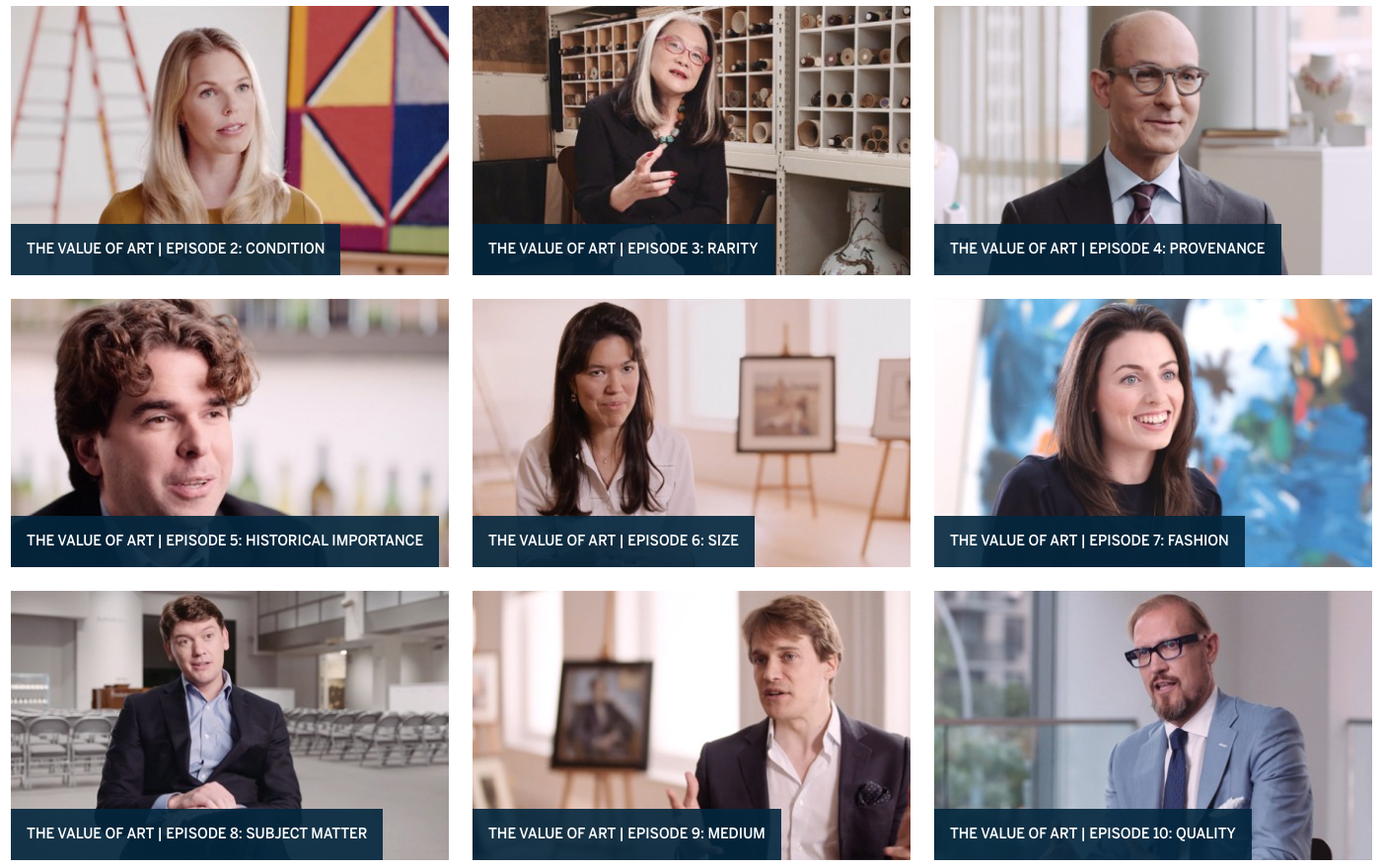
The Value of Art

10 short videos created by Sotheby’s identifying and discussing 10 different qualities.

The Value of Art | Episode 1: Authenticity
“Authenticity is the soul of the object,” says Chinese works of art expert Nicolas Chow, adding “Anything that is worth something is worth being faked.” In Episode 1, see how Chow and other Sotheby’s specialists identify the true originals. Sometimes consulting an artist’s catalogue raisonné is enough to affirm authenticity, but other pieces require sleuthing for clues that only a seasoned expert would think to sniff out – sometimes quite literally.

Screen Shot 2020-06-06 at 5.30.03 PM

https://www.sothebys.com/en/series/the-value-of-art

Banksy Is a Control Freak. But He Can’t Control His Legacy.

This article speaks to some important questions about art: What is the purpose of art? What makes art valuable? What is the role of authorities in determining the value of art?

The enormous popularity of Banksy’s brand of urban art has given the cultural establishment, increasingly jittery about perceptions of elitism, plenty to think about. The Staatsgalerie Stuttgart has asked the question: Is Banksy a historically significant artist? If he is — and for many that is a very big “if” — what will be his legacy?

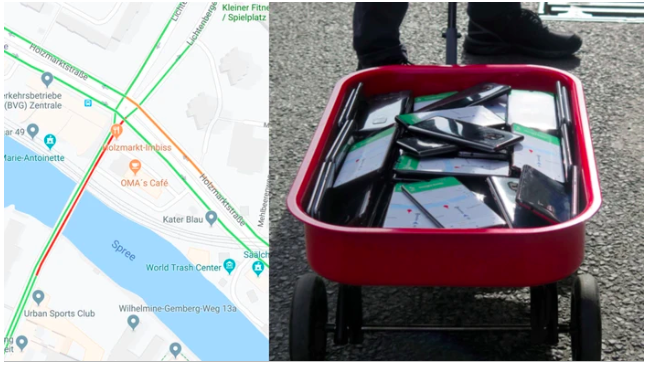
This Man Created Traffic Jams on Google Maps Using a Red Wagon Full of Phones

Screen Shot 2020-02-05 at 9.25.35 AM

The maps are their own territory, their own objective reality, not just a reflection of the real world but a branch of it. Weckert was showing us all how data and maps can affect the world they’re meant to chart. “Maps have the potential as an instrument of power,” he said. “They substitute political and military power in a way that represents the state borders between territories and they can repeat, legitimate, and construct the differences of classes and social self-understandings.”

https://www.vice.com/en_us/article/9393w7/this-man-created-traffic-jams-on-google-maps-using-a-red-wagon-full-of-phones

Icebergs, Climate Change and Art Lesson

What is the purpose of art? What knowledge can we acquire through art? These questions can be addressed in many ways. In light of all the attention climate science and climate change have gotten, there are many interesting questions that are raised about why scientists have not been more effective in communicating with the general public issues surrounding climate change and why skepticism and inaction are abound. There are many great TOK connections to these issue. There was an interesting work of public art a few years ago that tried to take the issue of melting glaciers and make it real by lugging giant broken off chunks of ice and bring them to the Climate Change Conference in Paris in 2015. I learned of it from a recent episode of the Netflix Show Abstract. This lesson has a couple of minutes from the show along with a worksheet and article. You can download the handouts I have made here along with the episode of the show.

Download Iceberg Art Climate Change Article

Download Iceberg Art WS

Download Abstract video clip

Here is a link to more ideas and plans I’ve put together on the Arts.

Here is a link to more arts related resources I have found around the web.

How Lil Nas X Took ‘Old Town Road’ From TikTok Meme to No. 1 | Diary of a Song

Though I could never stand this song, I think the story of the song is a pretty fascinating one and a great topic for TOK. Elements worthy of discussion:

  • This song was essentially a collaboration between people who never met, facilitated by the internet.
  • The DJ who made the beat sampled part of it from another artist (originality)
  • The song made it onto the top of the country music charts but was then removed because it wasn’t “country” enough. (Definitions and categorization of art).
  • The artist wrote a “country” song about experiences he didn’t have and culture he wasn’t a part of. Is this an example of cultural appropriation? Does it matter whether the song is about authentic experiences?

Art and reality: How accurately does “Euphoria” portray real teens’ lives? Does it matter?

The central point here is that the show Euphoria inaccurately portrays teenagers’ lives which raises the question: Is there a responsibility that comes with creating artwork? Must it be accurate? Who decides?

The claim that the show is inaccurate is backup with statistics raises the question: How can math/statistics help us acquire knowledge? (or understand reality?)

People’s perceptions of teens’ behaviors seems to be generally inaccurate beyond what this show. If presented with this article and appropriate statistics would people change their mind or perceptions of these issues? I’m not sure that it would which leads us to the question: What is the role of intuition in acquiring knowledge? Can mathematical knowledge overcome intuitive beliefs?

This reminded me of an earlier article from the New York Times:

“The Kids Are More Than All Right”

https://well.blogs.nytimes.com/2012/02/02/the-kids-are-more-than-all-right/