Is Whole Milk Good For Us After All?

“Scientists who tallied diet and health records for several thousand patients over ten years found, for example, that contrary to the government advice, people who consumed more milk fat had lower incidence of heart disease.”

http://www.washingtonpost.com/rweb/biz/for-decades-the-government-steered-millions-away-from-whole-milk-was-that-wrong/2015/10/06/1b6e264aa89b1afcfa28e4450cb29576_story.html?wpisrc=nl_draw2

Publisher Promises Revisions After Textbook Refers to African Slaves as ‘Workers’

“It talked about the U.S.A. being a country of immigration, but mentioning the slave trade in terms of immigration was just off,” Ms. Dean-Burren said in an interview. “It’s that nuance of language.”

“This is what erasure looks like,” she added.

“This program addresses slavery in the world in several lessons and meets the learning objectives of the course. However, we conducted a close review of the content and agree that our language in that caption did not adequately convey that Africans were both forced into migration and to labor against their will as slaves.”

http://www.nytimes.com/2015/10/06/us/publisher-promises-revisions-after-textbook-refers-to-african-slaves-as-workers.html

What Art Unveils

“Art is a way of learning about ourselves. Works of art are tools, but they have been made strange, and that is the source of their power.”

“My hypothesis is that artists make stuff not because the stuff they make is special in itself, but because making stuff is special for us. Making activities — technology, for short — constitute us as a species. Artists make stuff because in doing so they reveal something deep and important about our nature, indeed, I would go so far as to say, about our biological nature.”

Building an Artificial Brain: Effort moves forward, but is it a good idea?

This article touches upon far more than just ethics. It raises the question of whether it is wise to try to build artificial intelligence but also discusses why the challenge of building such a brain is so great.

“Advances in science often have made people uneasy, even angry, going back to Copernicus, who placed the sun — not the Earth — at the center of the universe. Artificial intelligence is particularly sensitive, because the brain and its ability to reason is what makes us human.

“In May 2014, cosmologist Stephen Hawking caused a stir when he warned that intelligent computers could be the downfall of humanity and ‘potentially our worst mistake in history.’ Elon Musk — the billionaire philanthropist who helped found SpaceX, Tesla Motors and PayPal — in October 2014 lamented that a program whose function is to get rid of e-mail spam may determine ‘the best way of getting rid of spam is getting rid of humans.’ He wasn’t joking.

http://www.washingtonpost.com/rweb/top/thought-process-building-an-artificial-brain/2015/10/03/db50f21c-f328-452b-8a95-7c4facee16ef_story.html?wpisrc=nl_draw2
What is phubbing, and it is ruining your relationships?

This is an interesting story for a few reasons. First, I always find it interesting when a new phenomenon requires the invention of new language. In this case, the word Phubbing is the synthesis of phone and snubbing to describe a phenomenon that didn’t require a word ten o fifty years ago because the thing didn’t exist.

This is also an interesting issue because it gives us some insight into contemporary problems in human behavior created by technological changes.

“According to new research, the act of phubbing, or phone snubbing, is a very real epidemic in the United States, and aside from being rude and inconsiderate, may also come with a few more insidious results.”

http://www.digitaltrends.com/mobile/what-is-phubbing-and-is-it-ruining-your-relationships/

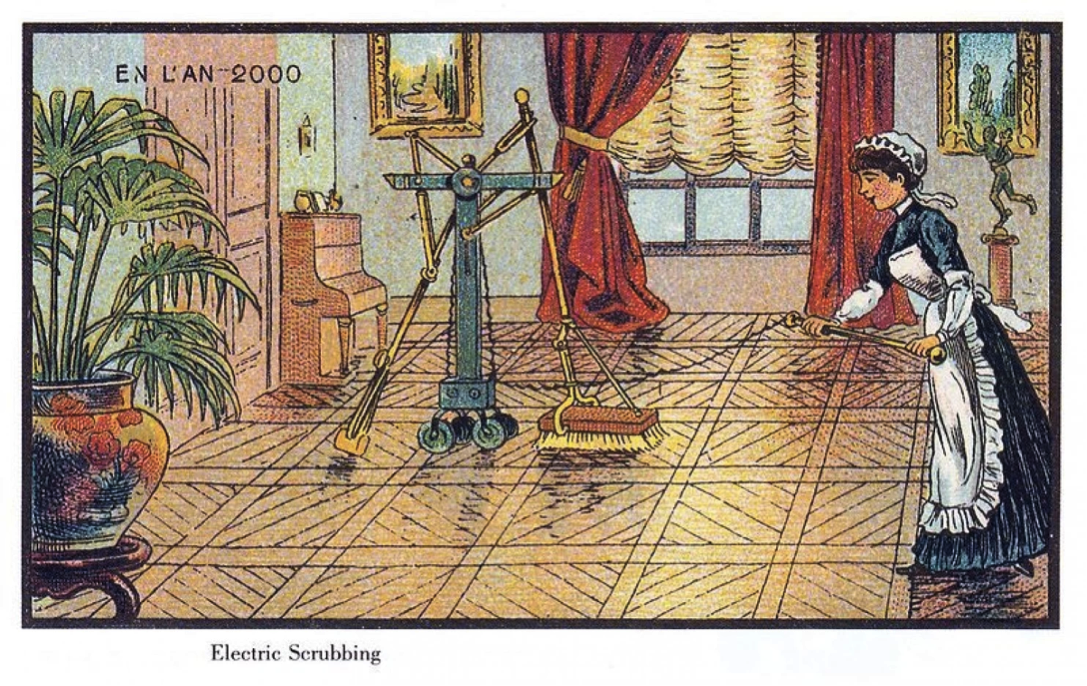
What people in 1900 thought the year 2000 would look like

What do these images tell us about humans’ abilities to conceive of the future? Does this show the power of human imagination or its limitations?

Future Images

“Some of the portraits are fantastic — swashbucklers riding on giant seahorses, anyone? But others are actually surprisingly accurate visions of our current era, including farming machines, helicopters, and what looks like a precursor to the new robot vaccum, the iRobot Roomba vacuum:”

http://www.washingtonpost.com/news/wonkblog/wp/2015/10/04/what-people-in-1900-thought-the-year-2000-would-look-like/

Is Cultural Appropriation Always Wrong?

“It’s a truth only selectively acknowledged that all cultures are mongrel. One of the first Indian words to be brought into English was the Hindi ‘’loot’ — ‘plunder.’ Some of the Ku Klux Klan’s 19th-century costumes were, of all things, inspired in part by the festival wear of West African slaves; the traditional wax-print designs we associate with West Africa are apparently Indonesian — by way of the Netherlands. Gandhi cribbed nonviolence from the Sermon on the Mount.”

http://www.nytimes.com/2015/10/04/magazine/is-cultural-appropriation-always-wrong.html

N.F.L. Announcers Are Bad at Math, Too

What does this article tell us about people’s motivation to take “correct” actions? What happens when math says one thing but our emotions tell us another? What if the agreed upon consensus correct answer is in fact wrong?

“It’s not that coaches don’t know the math — rather, it seems they don’t want to be criticized. If a coach does the expected and sends out the punt unit on fourth down, and then his team goes on to lose, players are blamed for the defeat. If the coach orders a conversion attempt that fails, the coach is blamed for subsequent defeat.”

http://www.nytimes.com/2015/09/30/upshot/nfl-announcers-are-bad-at-math-too.html?hp&action=click&pgtype=Homepage&module=mini-moth®ion=top-stories-below&WT.nav=top-stories-below&_r=0

The Curious Politics of the ‘Nudge’

“Earlier this month, President Obama signed an executive orderdirecting federal agencies to collaborate with the White House’s new Social and Behavioral Sciences Team to use insights from behavioral science research to better serve the American people. For instance, studies show that people are more likely to save for retirement when they are automatically enrolled into a 401(k) retirement saving plan that they can opt out of than when they must actively opt in.”

http://mobile.nytimes.com/2015/09/27/opinion/sunday/the-curious-politics-of-the-nudge.html?_r=1

What is wrong with the way we think? A Q&A with social psychologist Richard Nisbett, who researches the processes of reasoning and decision-making.

“Today, the notion of ‘smart-thinking’ is ubiquitous. This huge publishing field was prefigured by the work of social psychologist Richard Nisbett who in 1977 published an empirically researched article that showed that many of our choices and preferences are influenced by factors outside our conscious awareness. This was ground-breaking and it became one of the most cited articles of the decade. Nisbett, who is Theodore M. Newcomb Distinguished Professor of social psychology and co-director of the Culture and Cognition programme at the University of Michigan, has published numerous books over his long career. The latest isMindware: Tools for Smart Thinking. Here, he discusses some of his ideas.”

https://newhumanist.org.uk/articles/4923/what-is-wrong-with-the-way-we-think?hash=e2b2da42-609c-4954-a751-23d86f8341ae