The Pursuit of Beauty: Yitang Zhang solves a pure-math mystery.

“The problem that Zhang chose, in 2010, is from number theory, a branch of pure mathematics. Pure mathematics, as opposed to applied mathematics, is done with no practical purposes in mind. It is as close to art and philosophy as it is to engineering. “My result is useless for industry,” Zhang said. The British mathematician G. H. Hardy wrote in 1940 that mathematics is, of “all the arts and sciences, the most austere and the most remote.” Bertrand Russell called it a refuge from “the dreary exile of the actual world.” Hardy believed emphatically in the precise aesthetics of math. A mathematical proof, such as Zhang produced, “should resemble a simple and clear-cut constellation,” he wrote, “not a scattered cluster in the Milky Way.” Edward Frenkel, a math professor at the University of California, Berkeley, says Zhang’s proof has “a renaissance beauty,” meaning that though it is deeply complex, its outlines are easily apprehended. The pursuit of beauty in pure mathematics is a tenet. Last year, neuroscientists in Great Britain discovered that the same part of the brain that is activated by art and music was activated in the brains of mathematicians when they looked at math they regarded as beautiful.”

http://www.newyorker.com/magazine/2015/02/02/pursuit-beauty

The Beauty of Bounded Gaps
A huge discovery about prime numbers—and what it means for the future of math.

http://www.slate.com/articles/health_and_science/do_the_math/2013/05/yitang_zhang_twin_primes_conjecture_a_huge_discovery_about_prime_numbers.html

Mathematicians are geeking out about a bizarre discovery in prime numbers

This article made me think about one of the recent TOK essay questions about the value of knowledge being limited if it does not have application in the world. This is an article about an interesting discovery about the properties of numbers that does not seem to have direct application in the world but still had many brilliant minds working on.

“As with anything to do with numbers, this bizarre pattern has always existed. The researchers only found it now because they went looking for it. Fortunately, the “anti-sameness” bias doesn’t yet have any practical implication on the rules of cryptography that underpin our important online transactions. But mathematicians are happy to be stumped. They have a new challenge to explain the phenomenon. As we know from historical examples, this hardy group of scholars won’t remain stumped for long.”

http://qz.com/639452/mathematicians-are-geeking-out-about-a-bizarre-discovery-in-prime-numbers/

Another article on the same subject.

https://www.newscientist.com/article/2080613-mathematicians-shocked-to-find-pattern-in-random-prime-numbers/

OK Cupid: “We Experiment On Human Beings!”

The ethics of human experimentation on the internet has been greatly debated, especially in light of the revelation that Facebook engaged in experiments on its users without their consent. Another site, OK Cupid, proudly states that they experiment on humans and whether or not you realize it, if you’re on the internet then you’re being experimented on all the time.

“We noticed recently that people didn’t like it when Facebook ‘experimented’ with their news feed. Even the FTC is getting involved. But guess what, everybody: if you use the Internet, you’re the subject of hundreds of experiments at any given time, on every site. That’s how websites work.”

http://blog.okcupid.com/index.php/we-experiment-on-human-beings/

Could this be the end of physics as we know it? Strange particle behavior calls standard model into question.

This article is a great illustration of how models and paradigms work in the natural sciences. Scientists propose models that embody paradigms that best explain and also predict observable data. When predictions are confirmed with experimental data the models and paradigms are also validated (see Einstein’s Gravitational waves for a recent example). When data does not come in as expected then the model itself is called in to question. Either the model needs to be amended or needs to be tossed in favor of a model that better explains data.

The standard model of particle physics is the focus of this article.

“These are not small, insignificant errors. The standard model makes precise predictions. If these new results are correct, it means that there must be a fundamental flaw in how we think about physics.”

http://www.mnn.com/green-tech/research-innovations/stories/standard-model-physics-called-question-strange-particle-behavior

Should Therapists Analyze Presidential Candidates?

“To diagnose conditions in someone we’ve never met — let alone offer treatment recommendations — is fraught both ethically and scientifically. Assessing patients face to face and finding out their experiences and history, much of which is private, and has perhaps never been disclosed to anyone, is essential. Otherwise, we risk making big errors and fostering confusion.”

http://www.nytimes.com/2016/03/07/opinion/campaign-stops/should-therapists-analyze-presidential-candidates.html?action=click&pgtype=Homepage&clickSource=story-heading&module=opinion-c-col-right-region&region=opinion-c-col-right-region&WT.nav=opinion-c-col-right-region

Homeopathy effective for 0 out of 68 illnesses, study finds

“The review found “no discernible convincing effects beyond placebo” and concluded “there was no reliable evidence from research in humans that homeopathy was effective for treating the range of health conditions considered”. ”

http://www.independent.co.uk/life-style/health-and-families/health-news/homeopathy-therapeutic-dead-end-systematic-review-no-evidence-it-works-a6884356.html?mc_cid=c28053bf7b&mc_eid=34e2887073

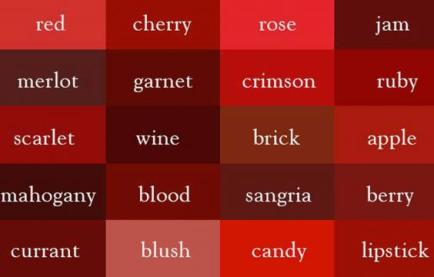
The world’s first thesaurus of colour shades: What kind of yellow is an egg yolk?

thesaurus-red

“I started to fall in love with words that could do double duty,” admits Sundberg, “colours you could load with metaphorical meaning and would give a reader more information than simply hue.

“For example, ‘porcelain white’ evokes stature, texture, possibly even a time period. ‘Watermelon pink’ makes you think of summer, sweet things, makes your mouth water. ‘Chartreuse’ feels sharp and bold, adds a hint of magic. My goal became to create a spectrum of words that I could endow with meaning and help add new layers to my stories.”

http://www.independent.co.uk/life-style/design/the-world-s-first-thesaurus-of-colour-shades-what-kind-of-yellow-is-an-egg-yolk-a6877791.html?mc_cid=c28053bf7b&mc_eid=34e2887073

Opinion vs facts: why do celebrities so often get it wrong?

“Celebrities often make wildly inaccurate claims and comments to millions of people. But the workings of our minds mean we’re all prone to such behaviour.”

“Without being too harsh, the Dunning-Kruger effect must be considered. Achieving high profile or celebrity status in the modern world is no indication of intelligence, and the effect shows that “low intelligence” is often accompanied by increased confidence in ones opinions and an apparent inability to accurately judge your own abilities and expertise in comparison to others. A willingness to present your poorly-thought-out conclusions as cast iron facts would be an inevitable consequence of this.”

https://www.theguardian.com/science/brain-flapping/2016/feb/10/opinion-vs-facts-why-do-celebrities-so-often-get-it-wrong?mc_cid=c28053bf7b&mc_eid=34e2887073

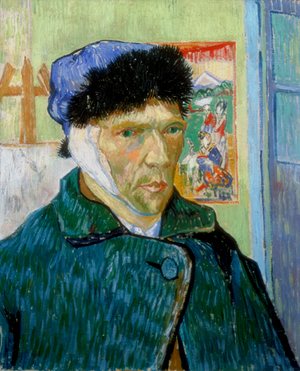
Tell us something we don’t know: why science can’t show us much about art

3762“The scientific ‘discovery’ that Van Gogh’s art changed after his 1888 breakdown proves a forensic approach is no match for the subjective eye of an art lover.

“There are objective results in science. There is no objective truth in art. It exists in our eyes and in our imaginations. I happen to agree with the research behind this latest Van Gogh investigation – that he got more strident and emotional in his art as his mental health declined – to the extent that I find the results obvious. But someone who has spent years looking at Van Gogh might disagree – she might see this as a melodramatic interpretation and argue that Van Gogh is not really an expressionist painter at all but a student of light and colour. That’s a valid point of view too, whatever the science says.

“Thanks to science, we know that we live on a rock orbiting a mediocre star in a mediocre galaxy. But we won’t ever invent a science that can tell us what Van Gogh’s painting Starry Night is about. The data lies hidden in our souls.”

Total recall sounds great, but some things should be forgotten

“But forgetting isn’t just a loss that comes with age. It’s a normal part of the memory process. We don’t need to remember a lot of what happens to us – what we made for dinner two years ago, where we left the car the last five times we parked in this lot. Those are examples of things that aren’t useful to remember anymore.

“There’s also the question of memories that are actively hindering our lives. Research suggests, and my work with memory-related conditions corroborates, that some people have an inability to forget traumatic events. This characteristic is partially responsible for conditions including depression and PTSD.”

https://theconversation.com/total-recall-sounds-great-but-some-things-should-be-forgotten-51715?mc_cid=c28053bf7b&mc_eid=34e2887073