Are there laws of history?
Historians believe that the past is irreducibly complex and the future wildly unpredictable. Scientists disagree. Who’s right?
‘Historical facts’ are not discrete items, awaiting scholars to hunt them down. They need to be created…
The danger here, of course, is that these approaches tend to assume that the natural sciences are capable of producing objective knowledge, and that mirroring their methodologies will produce ‘better’ knowledge for the rest of the academy. Half a century of research in the history of science has shown that this perspective is deeply flawed. The sciences have their own history – as indeed does the notion of objectivity – and that history is deeply entwined with power, politics and, importantly, the naturalisation of social inequality by reference to biological inferiority. No programme for understanding human behaviour through the mathematical modelling of evolutionary theory can afford to ignore this point.
https://aeon.co/essays/if-history-was-more-like-science-would-it-predict-the-future
 Putting the current pandemic into a historical context has undoubtedly served a purpose. Linkages to the past can serve as warnings, and they might even offer solace…Drawing linkages always requires simplification, and oversimplification can lead to anachronism….When we hunt for similarities, we overlook everything that’s different – and that is dangerous. Sure, finding proof of our arguments is satisfying, but often, what’s most important is what we’ve had to ignore to find it.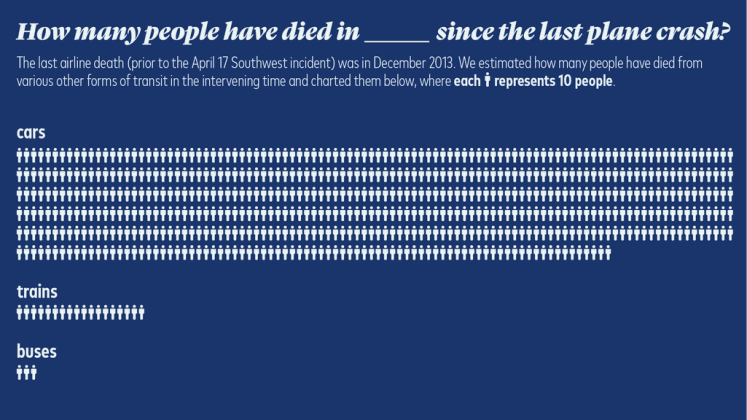


 TOK Topics